
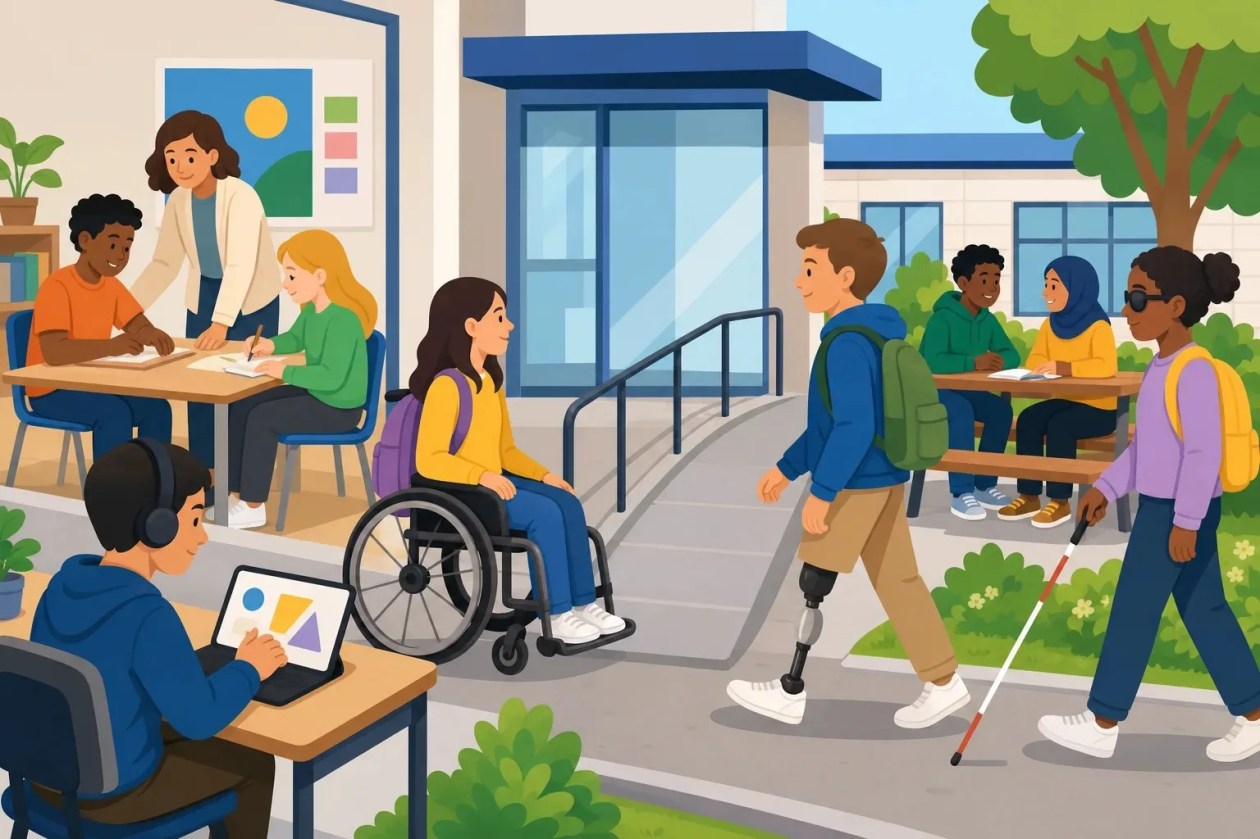
Accessibility is not only about special equipment or formal adjustments; it is about making everyday school life workable for every child. In an elementary school, that means noticing the small barriers that can stop a pupil from joining in, learning well, or feeling they belong. From both a teacher’s and an administrator’s point of view, accessibility is closely tied to equity: if access is uneven, then opportunity is uneven too.
What accessibility looks like in daily routines
In the school day, accessibility shows up in ordinary moments: getting into the building, finding the classroom, understanding instructions, using learning materials, joining group work, and moving safely around shared spaces. A child with a physical disability may need clear pathways and furniture that can be rearranged. A pupil with hearing loss may need the teacher to face the class and speak clearly. A child who is still learning English may need visual support, simple language, and predictable routines. These are not extra benefits for a few pupils; they are ways of making the school usable for everyone.
- Clear signage, uncluttered corridors, and accessible entrances
- Instructions given in more than one way: spoken, written, and visual
- Flexible seating and space for movement or equipment
- Accessible learning materials, such as large print, captions, or audio where needed
- Consistent routines that help pupils know what will happen next
Why this matters for equity
Equity means giving each child what they need to take part and succeed, not treating every child exactly the same. When a school removes barriers, it reduces the gap between pupils who can access learning easily and those who cannot. For example, if homework is only sent home in one format, some families may be left out. If a classroom discussion relies only on speaking quickly, some pupils will be shut down before they can show what they know. Accessibility helps make fairness practical, not just theoretical.
Accessibility turns fairness into everyday practice.
What teachers can do
Teachers shape accessibility through the choices they make before, during, and after lessons. Before teaching, they can plan for different ways pupils will receive information and show understanding. During lessons, they can check who is participating, who is confused, and who may need a different route into the task. After lessons, they can reflect on which barriers appeared and how to reduce them next time. Small changes often make a large difference, especially in elementary classrooms where pupils are still building independence and confidence.
- Use clear, direct language and break tasks into manageable steps
- Offer more than one way to respond, such as drawing, speaking, writing, or using manipulatives
- Build in pauses, repetition, and visual reminders
- Watch for signs that a pupil is excluded from a task, even if they are physically present
- Work with colleagues and families when a pupil needs a different arrangement
What administrators can do
Administrators make accessibility possible at a whole-school level. They can shape policies, allocate resources, and set expectations so that access is not left to individual goodwill. This includes making sure buildings, communication systems, timetables, and support services do not create unnecessary barriers. It also means creating a school culture where staff feel responsible for inclusion and where pupils and families know their concerns will be heard. When leaders treat accessibility as part of normal school improvement, it becomes more consistent and more effective.
- Review school spaces and routines for barriers, not just physical ones
- Provide staff training on inclusive practice and reasonable adjustments
- Ensure information for families is easy to understand and available in accessible formats
- Support teachers with time, resources, and specialist advice
- Track patterns of access and participation so problems are noticed early
Accessibility in everyday school life is about more than compliance. It is about making sure each child can enter, understand, participate, and belong. When teachers and administrators work together, they create a school where access is built into the routine, and equity becomes something pupils experience every day.
Key takeaways
- Look for barriers in ordinary routines, not only in obvious disability-related needs.
- Accessibility supports equity by making learning usable for more pupils.
- Teachers can adapt instruction and participation; administrators can remove school-wide barriers.
- Small, consistent changes in daily practice can have a big impact on inclusion.
Leave a Reply