
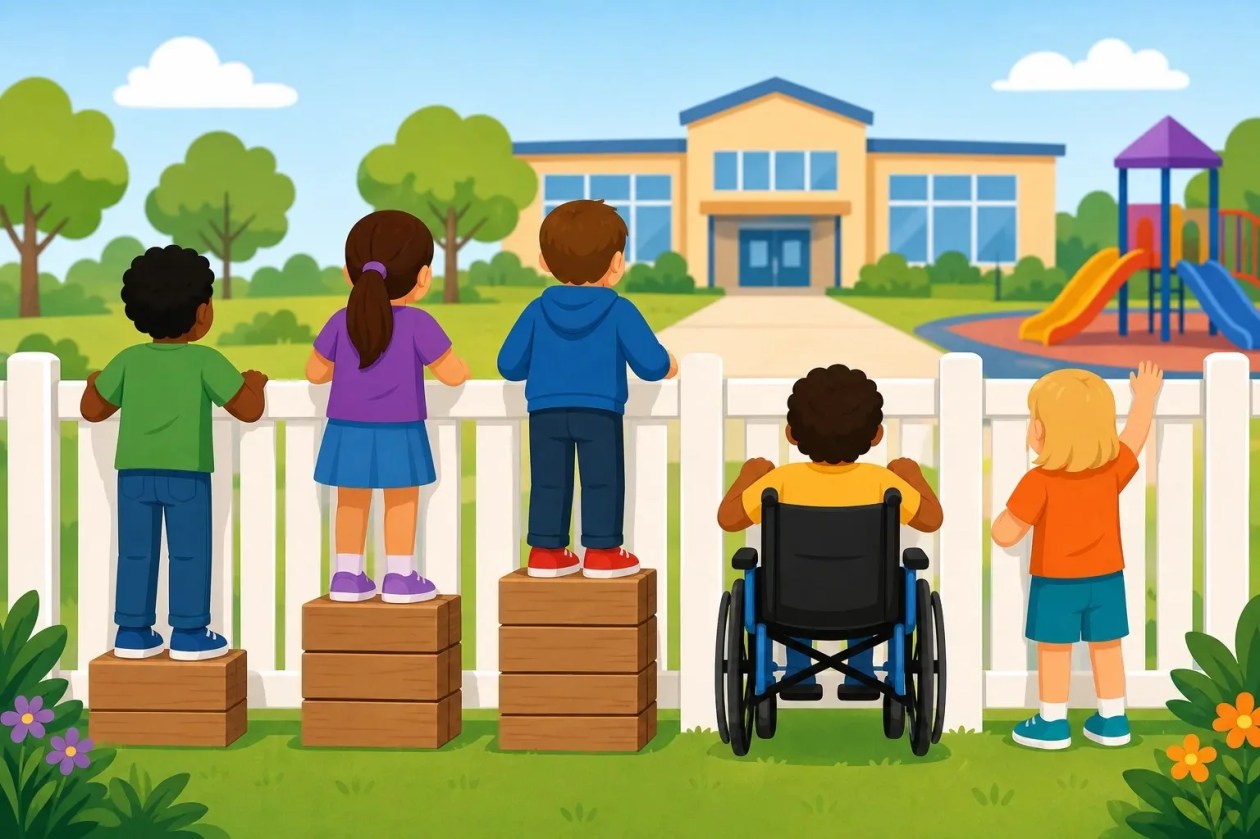
Fairness in an elementary school is not about treating every pupil exactly the same. It is about making sure each child can take part, learn, and belong. Accessibility matters because children arrive with different strengths, needs, languages, abilities, and experiences. When schools remove barriers, they give every pupil a genuine chance to succeed, rather than expecting all children to fit one fixed way of learning.
Equality and equity in everyday school life
Equality means giving everyone the same thing. Equity means giving each child what they need to access the same learning. In an elementary classroom, that might mean one pupil uses a visual timetable, another has extra time to finish work, and another hears instructions in simpler language. These are not special favours; they are fair adjustments that help pupils access the lesson on equal terms.
For you as a teacher, equity shows up in the small decisions you make each day: where pupils sit, how you explain tasks, whether your resources can be read by all children, and whether you offer more than one way to show understanding. For you as an administrator, equity means shaping school policies, staffing, and routines so that support is built in rather than added later. A fair school does not wait for a child to struggle before acting.
What barriers can look like
Barriers are anything that makes it harder for a pupil to join in fully. These may be physical, such as steps that block access to a room; communication barriers, such as instructions that are too fast or too complex; or organisational barriers, such as a timetable that gives no warning before changes. Some barriers are less visible, like tasks that assume every child can read at the same level or work independently for the same length of time. Accessibility is about spotting these obstacles before they exclude children.
Fairness is not sameness; it is removing the barriers that stop a child from taking part.
What fair practice looks like for teachers and administrators
- Teachers can use clear routines, visual supports, and simple instructions so pupils know what to do and what comes next.
- Teachers can offer different ways to respond, such as speaking, drawing, writing, or using practical materials.
- Teachers can check understanding often, rather than assuming silence means a pupil is coping.
- Administrators can make accessibility part of school planning, not an extra task for individual staff.
- Administrators can provide training, time, and resources so teachers can adapt lessons well.
- Administrators can review school spaces, communication, and policies to make sure they are welcoming to all pupils.
From both perspectives, fairness is proactive. A teacher plans with accessibility in mind from the start. An administrator creates the conditions that make that planning possible. Together, they help pupils feel safe, respected, and able to learn alongside their classmates.
Why this matters for equity
When accessibility is taken seriously, pupils are less likely to be left out of learning, play, or school decisions. That matters because exclusion often leads to lower confidence, lower achievement, and a weaker sense of belonging. Equity in elementary schools is not only about academic results; it is also about dignity, participation, and the chance to be part of the school community. Accessibility is one of the clearest ways schools can turn fairness into everyday practice.
Key takeaways
- Fairness means giving each pupil what they need to access learning, not giving everyone the same thing.
- Accessibility removes barriers so children can take part, learn, and belong.
- Teachers support fairness through clear, flexible classroom practice.
- Administrators support fairness by building accessibility into school policies, training, and resources.
Leave a Reply