
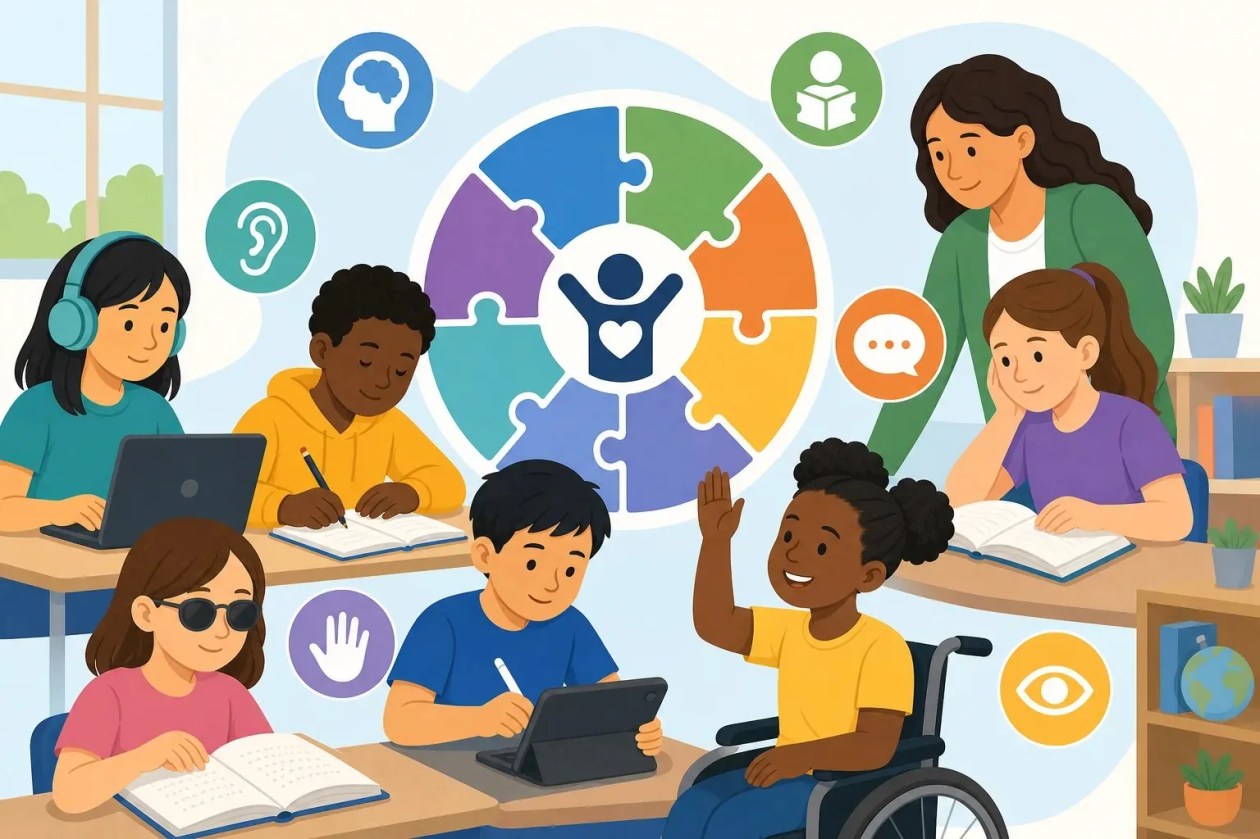
In every school, children arrive with different strengths, needs, languages, experiences, and ways of learning. Recognising this diversity is the first step towards accessibility, because a school can only be fair when it is designed with all learners in mind. From both a teacher’s and an administrator’s perspective, this means noticing differences early, valuing them properly, and making sure they do not become barriers to participation or progress.
What diversity looks like in the classroom
Diverse learners are not a small group at the edge of school life; they are the reality of every classroom. Some children may have disabilities that affect movement, hearing, vision, attention, or communication. Others may be learning in a language that is not their first language, may have gaps in prior learning, or may need more time, structure, or support to show what they know. You may also see differences in confidence, culture, family background, and learning style. When these differences are recognised, teachers can plan lessons that are clearer, more flexible, and more inclusive.
For example, a child who struggles with reading aloud may still understand the lesson well when they can listen, discuss ideas, or use pictures. Another child may find a busy classroom overwhelming and work better with predictable routines and clear instructions. Recognising diversity helps you avoid assuming that one way of learning works for everyone.
Why recognition is linked to equity
Equity means giving each learner what they need to have a fair chance to succeed. It is not the same as treating everyone exactly the same. If one child needs large-print materials, a quiet space, or extra processing time, providing those supports is not special treatment; it is fairness in action. Accessibility supports equity because it removes barriers that would otherwise stop some learners from taking part fully in lessons, activities, and school life.
Fairness in school is not about sameness; it is about removing barriers so every child can participate and succeed.
What teachers can do
Teachers play a central role in recognising diverse learners. You can begin by observing how different students respond to tasks, instructions, and classroom routines. Then you can adjust your teaching in practical ways: offer information in more than one format, check understanding in different ways, and build in options for students to show learning through speaking, writing, drawing, or hands-on work. Simple changes, such as clear visual schedules, chunking instructions into smaller steps, and using examples that reflect different backgrounds, can make a big difference.
- Notice patterns in participation, confidence, and achievement.
- Use flexible teaching methods so more than one type of learner can access the lesson.
- Invite student voice so learners can explain what helps them succeed.
- Work with families and support staff to understand individual needs.
- Avoid labels that limit expectations; focus on strengths as well as challenges.
What administrators can do
Administrators shape the conditions that make accessible teaching possible. This includes setting expectations that inclusion matters, providing staff development, and ensuring school policies support diverse learners rather than unintentionally excluding them. Administrators can also review the school environment for physical, communication, and procedural barriers, such as inaccessible entrances, unclear notices, or assessment practices that disadvantage certain students. When leaders prioritise accessibility, they help create a school culture where diversity is seen as normal and valuable.
- Make accessibility part of school planning, not an afterthought.
- Provide time and training for staff to learn inclusive practices.
- Check whether policies, spaces, and communications are accessible to all families.
- Use data and feedback to identify which learners are being left out.
- Support a culture where differences are respected and expectations stay high.
When you recognise diverse learners, you are not lowering standards. You are making sure the route to those standards is open to everyone. That is why accessibility and equity belong together: both are about ensuring that every child has a genuine opportunity to learn, belong, and succeed.
Key takeaways
- Diversity is normal in every school, so accessibility should be planned from the start.
- Equity means giving learners the support they need, not giving everyone the same thing.
- Teachers can reduce barriers through flexible teaching, clear routines, and multiple ways to learn.
- Administrators support equity by building policies, training, and school environments that include everyone.
Leave a Reply