
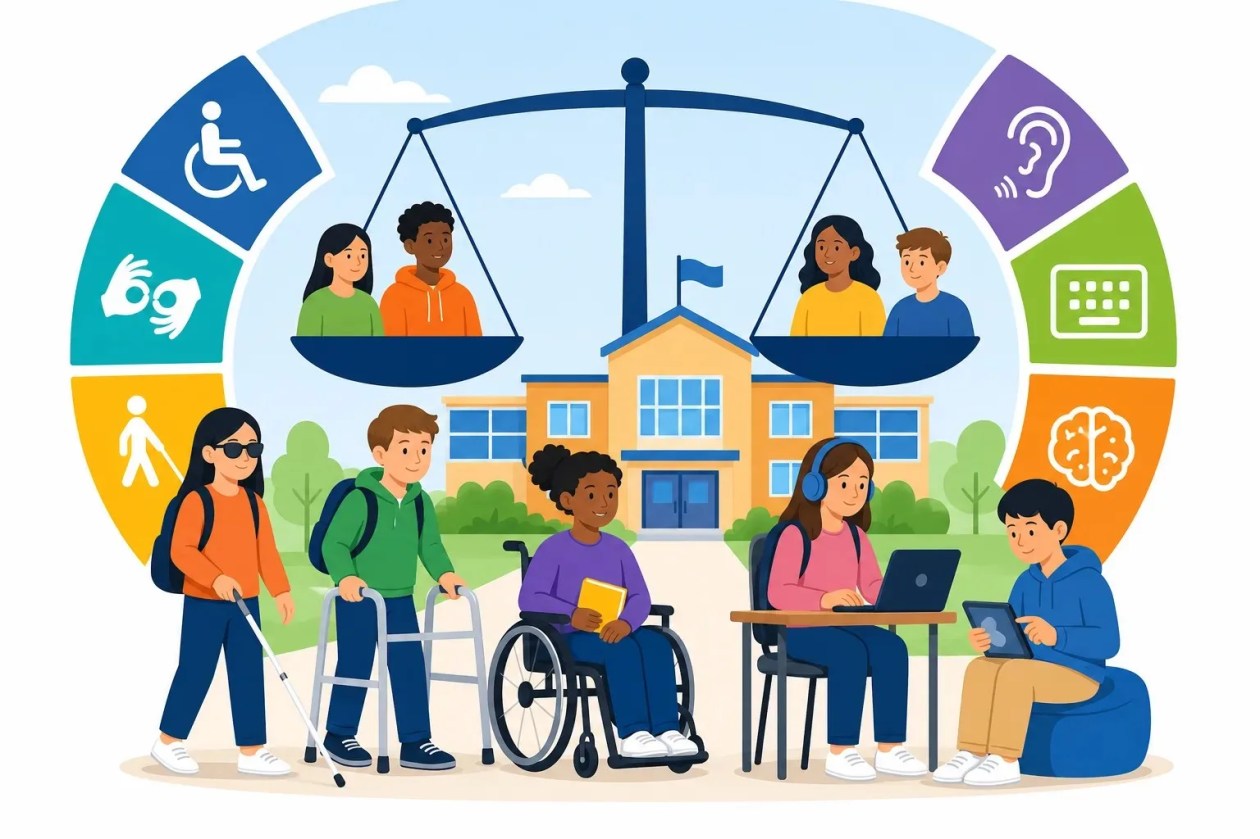
Accessibility is not just about making school easier to use; it is about making sure every child can take part, learn and succeed on fair terms. In an elementary school, barriers can be physical, sensory, language-based, digital or social. When you remove those barriers, you are not giving some pupils an unfair advantage — you are giving each pupil what they need to access the same opportunities. That is where accessibility and equity meet.
Accessibility and equity: the connection
Equity means fairness, but not sameness. Two pupils may not need the same support to reach the same learning goal. One child may need large-print worksheets, another may need instructions read aloud, and another may need extra time or a quiet space. If the school only offers one standard way of learning, assessment or communication, some pupils are left behind. Accessibility helps schools adapt the environment, materials and routines so that more pupils can participate fully from the start.
Accessibility removes barriers; equity makes sure support is fair.
What barriers can look like in an elementary school
In elementary settings, barriers often show up in everyday places. A classroom layout that is hard to move around in can limit access for a child using mobility support. A worksheet with dense text may block a pupil who is still developing reading skills. Fast-paced verbal instructions can disadvantage children with hearing needs, language differences or attention difficulties. Even school routines, such as unclear signage, inaccessible online platforms or one-size-fits-all behaviour expectations, can unintentionally exclude pupils. Accessibility asks you to notice these barriers before they become learning gaps.
What teachers can do
From a teacher perspective, accessibility begins with planning lessons that offer more than one way to understand, respond and show learning. You can provide visual supports, break instructions into smaller steps, check understanding, and vary how pupils can complete tasks. For example, a science lesson might include pictures, spoken explanation and hands-on materials, so pupils can engage through different strengths. You can also use inclusive language, build predictable routines and create a classroom culture where asking for help is normal rather than embarrassing. These choices support equity because they reduce the need for pupils to fight against avoidable barriers.
- Give clear instructions in more than one form, such as speaking, writing and visuals.
- Offer flexible ways for pupils to show what they know, such as drawing, talking, writing or building.
- Check the classroom environment for movement, visibility, noise and lighting.
- Plan for different reading levels and language needs when choosing materials.
- Normalise support by making adjustments part of everyday teaching, not a last-minute exception.
What administrators can do
From an administrator perspective, accessibility becomes equitable when it is built into school systems, not left to individual goodwill. Leaders can review policies, allocate resources, train staff and monitor whether all pupils are being served well. This includes making sure buildings, communication systems, digital tools and assessment practices are accessible. Administrators also shape the culture of the school: when leaders treat accessibility as a shared responsibility, teachers are more likely to act early and consistently. In that way, equity is supported across the whole school rather than depending on a single classroom.
- Audit school spaces, documents and digital platforms for access barriers.
- Provide staff training on inclusive practice and reasonable adjustments.
- Ensure families can receive information in accessible formats and languages they understand.
- Use school data to spot patterns of exclusion, such as repeated absences, low participation or behaviour referrals.
- Build accessibility into planning, budgeting and improvement goals.
Why this matters for fairness and belonging
Accessibility supports equity because it helps every child belong, not just cope. When pupils can enter the building, understand the lesson, use the materials and take part in school life, they are more likely to feel respected and capable. That sense of belonging matters: it affects confidence, attendance, participation and achievement. A school that removes barriers is not lowering expectations. It is making sure expectations are reachable for all learners, which is the heart of fair education.
Key takeaways
- Accessibility and equity work together: accessibility removes barriers, and equity ensures support is fair for each learner.
- Teachers can support equity through flexible lessons, clear communication and inclusive classroom routines.
- Administrators support equity by building accessibility into policy, training, budgets and school-wide systems.
- When schools are accessible, more pupils can participate fully, feel they belong and achieve well.
Leave a Reply