
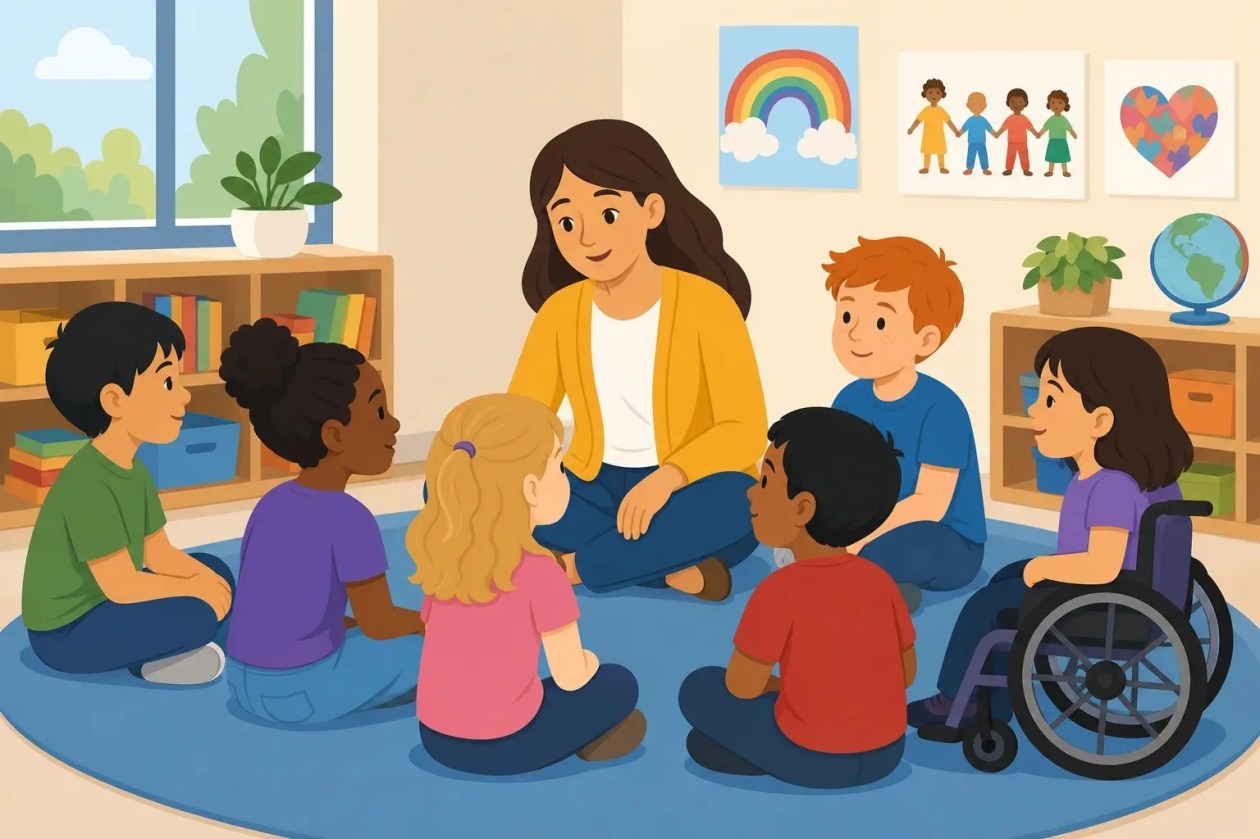
Equity in the classroom means giving each student what they need to succeed, not simply giving everyone the same thing. This lesson uses a childhood story to show why fairness is not always about sameness, and why teachers need to notice readiness, background and support needs before deciding what to do.
A childhood lesson about readiness
The story begins with a teenager who wanted to go to a local teen club because his brothers were allowed to go. On the surface, equality would say, “He is 15, so he should go too.” But his mother understood something deeper: his brothers were ready for that environment, while he was not. Her decision was not about punishment or favouritism. It was about knowing each child well enough to decide what they were ready for. That is the heart of equity.
“A good parent knows her children and what they’re ready for and not ready for.”
source material
Equality and equity are not the same
Equality gives the same rule or the same access to everyone. Equity asks whether the rule or access actually helps each person. In the story, equality said all 15-year-olds could go to the club. Equity said this particular 15-year-old needed more time to grow and mature before entering that space. In a classroom, this matters because students do not all arrive with the same skills, confidence, home support or prior learning. If you treat every learner exactly the same, you may still leave some students unable to succeed.
Economic equity: resources when they are needed
One form of equity is economic equity, which is about making sure students have the resources they need at the right time. The source gives a sharp contrast: one school had a modern building, robots and sustainable agriculture work, while another nearby school was 100 years old, with no heat or air conditioning, no high-speed internet and no textbooks. Students in those two schools are not starting from the same place, so expecting the same results without extra support is unfair. Economic equity means responding to that gap with real resources.
- safe, well-maintained buildings
- working heating, cooling and internet access
- textbooks and learning materials
- staff and support services
- extra help when students need it
Cultural equity: belonging, representation and respect
The second form is cultural equity. This is about whether students see themselves valued in school. The source points out that many students are students of colour, while most teachers in America are white. It argues that students benefit when they have teachers, role models, nurses and paraprofessionals who look like them and value their gifts, regardless of race, religion, gender, sexual orientation or citizenship status. Cultural equity helps students feel recognised, understood and supported, and it also benefits the whole school community.
The examples from the source show why representation matters. Teachers of colour can act as role models and cultural liaisons. The text also says that Black students who have a Black teacher in elementary school are less likely to drop out of high school and more likely to go to college. In other words, who is in the classroom can affect how students see their future and how well they do in school.
What equity looks like in practice
The school stories about John and Shamika show equity in action. John arrived angry, behind in school and without a positive Black role model. The response was not to label him as a problem, but to give him love, academic support, mentoring and wider experiences such as art programmes and trips. Shamika needed something similar: not just lessons, but belief, support and care so that she could see herself as more than the harm around her. In both cases, equity meant seeing the whole person and providing what would help them grow.
- Notice what a student needs, not just what the rule says.
- Think about whether the student is ready for the task, space or expectation.
- Provide the right support, such as resources, mentoring or extra time.
- Make sure the student feels valued and represented.
- Adjust your approach as the student grows.
The key message is simple: there is no such thing as an “at-risk” student in this way of thinking. Students are at promise and at potential when the proper supports and love are there. Equity is not lowering standards; it is removing barriers so students can meet high expectations with dignity and a fair chance to succeed.
Key takeaways
- Equity means giving students what they need, not giving everyone exactly the same thing.
- A student may need more time, support or maturity before they are ready for a challenge.
- Economic equity provides resources; cultural equity provides belonging, respect and representation.
- When you think about fairness in school, ask: what does this student need to succeed?
Leave a Reply