
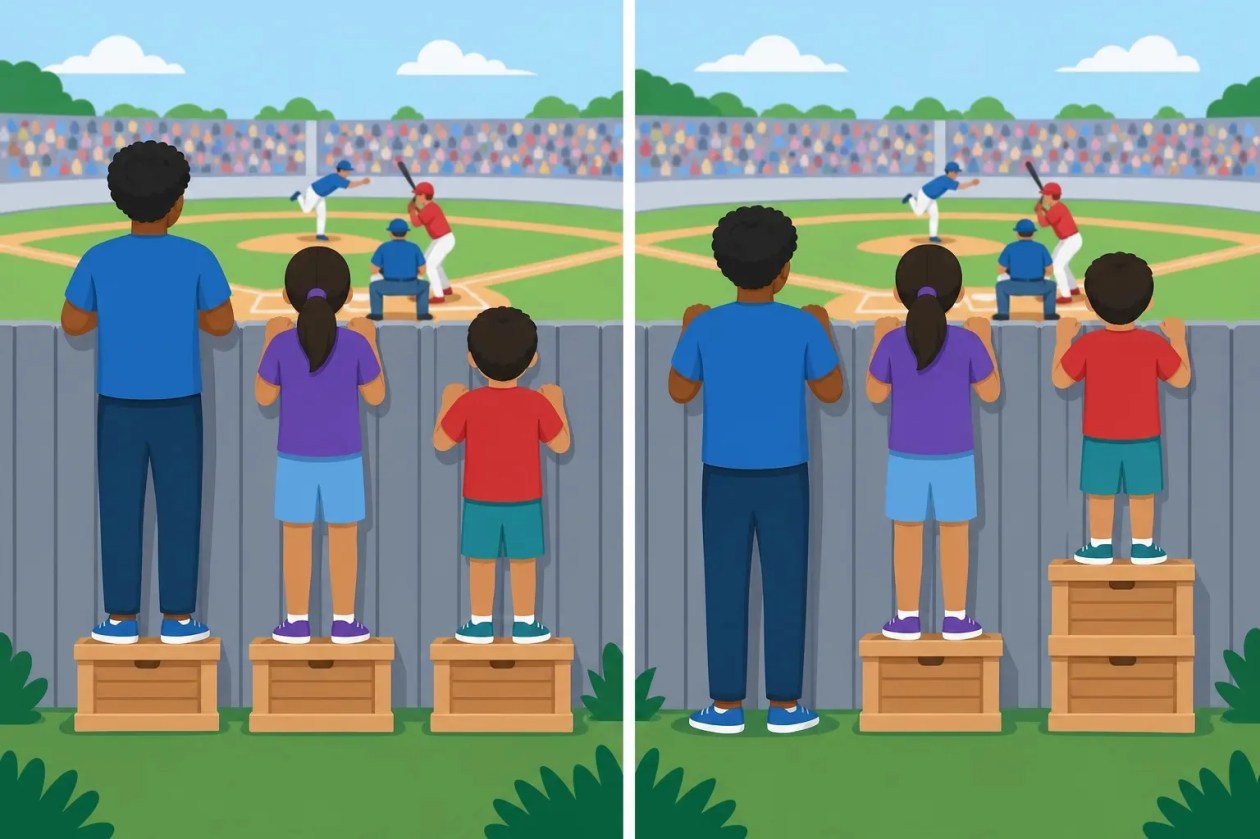
When you look at a classroom, it is easy to think fairness means giving everyone the same thing. But this lesson shows why that is not always enough. Equity means giving each student the support they actually need, so they can grow, learn and succeed. The source material uses a simple family story to show the difference between equality and equity, then connects that idea to schools, resources and relationships.
What equality and equity mean
Equality means giving everyone the same thing. In the story, equality would have meant letting a 15-year-old go to the club just because his brothers could. Equity means looking at the person, the situation and what they are ready for. The mother explains that her son was not ready for that environment yet, even though his brothers were. That is equity: not the same treatment for everyone, but the right support at the right time.
A good parent knows her children and what they're ready for and not ready for.
source material
Why the same treatment is not always fair
The club story makes the point very clearly. The speaker thought, ‘My brothers can go, so I should be able to go too.’ That sounds equal, but it was not fair for him because he needed more growth and maturity first. When he went anyway, he had a bad experience and was punched in the eye. The lesson is that fairness is not always about sameness. Sometimes the fairest choice is to delay, adjust or provide extra support because one student is not in the same place as another.
This matters in school because students do not all arrive with the same skills, confidence, background or access to help. If you treat every student exactly the same, you may miss what each one needs to thrive. Equity asks teachers to notice those differences and respond with care.
Economic equity in the classroom
Economic equity is about resources. It means making sure students have what they need when they need it. The source material gives a striking contrast: one school had a modern building, robots and sustainable agriculture projects, while another nearby school had a 100-year-old building, no heat or air conditioning, no high-speed internet and no textbooks. If students do not have the same learning tools, it is unreasonable to expect them to achieve the same outcomes without support.
- safe buildings and comfortable classrooms
- textbooks and learning materials
- reliable internet access
- technology and up-to-date equipment
- enough staff and support for students who need extra help
Economic equity does not mean every classroom must look identical. It means schools should respond to need so that students are not held back by lack of basic resources. In practice, that can mean more funding, better facilities, or extra support for schools serving students with greater need.
Cultural equity and belonging
Cultural equity is about whether students feel seen, respected and valued for who they are. The source material points out that many students of colour are taught by teachers who do not look like them, and argues that students deserve teachers, role models, nurses and paraprofessionals who value their gifts no matter their race, religion, gender, sexual orientation or citizenship status. When students see adults who understand their experiences, they are more likely to feel they belong.
The material also explains that teachers of colour can act as role models and cultural liaisons. According to the examples given, their presence can help reduce absenteeism, increase family and community involvement, and support students who are too often overrepresented in exceptional education. The point is not that one kind of teacher is better than another, but that diversity in staff helps more students feel understood and supported.
This is especially important in schools because feeling invisible or misunderstood can affect behaviour, attendance and achievement. When students believe adults value them, they are more likely to trust school and stay engaged.
What equity looks like in real student support
The stories of John and Shamika show how equity works in practice. John arrived angry, behind in school and without a positive Black male role model. He was given love, academic support, mentoring, art experiences and opportunities he had never had before. That support helped him graduate and move forward into the army. Shamika needed more than lessons; she needed belief in herself, encouragement and care. With that support, she graduated and spoke about passing the help on to others.
These examples show that equity is not only about materials. It is also about relationships, encouragement and high expectations matched with real support. The source material makes a strong point here: there is no such thing as an ‘at-risk student’ when the right supports are in place. Students are full of promise and potential when adults give them what they need.
- notice what each student needs, rather than assuming all needs are the same
- offer both academic support and emotional support
- build trust through patience, respect and consistency
- make room for students to grow before expecting them to do everything alone
- value students’ identities and experiences as strengths
Key takeaways
- Equality means giving everyone the same thing; equity means giving each student what they need to succeed.
- In classrooms, equity can involve resources, relationships, representation and emotional support.
- Fairness is not always sameness: sometimes students need different support at different times.
- When schools practise equity, more students feel seen, supported and able to achieve.
Leave a Reply