
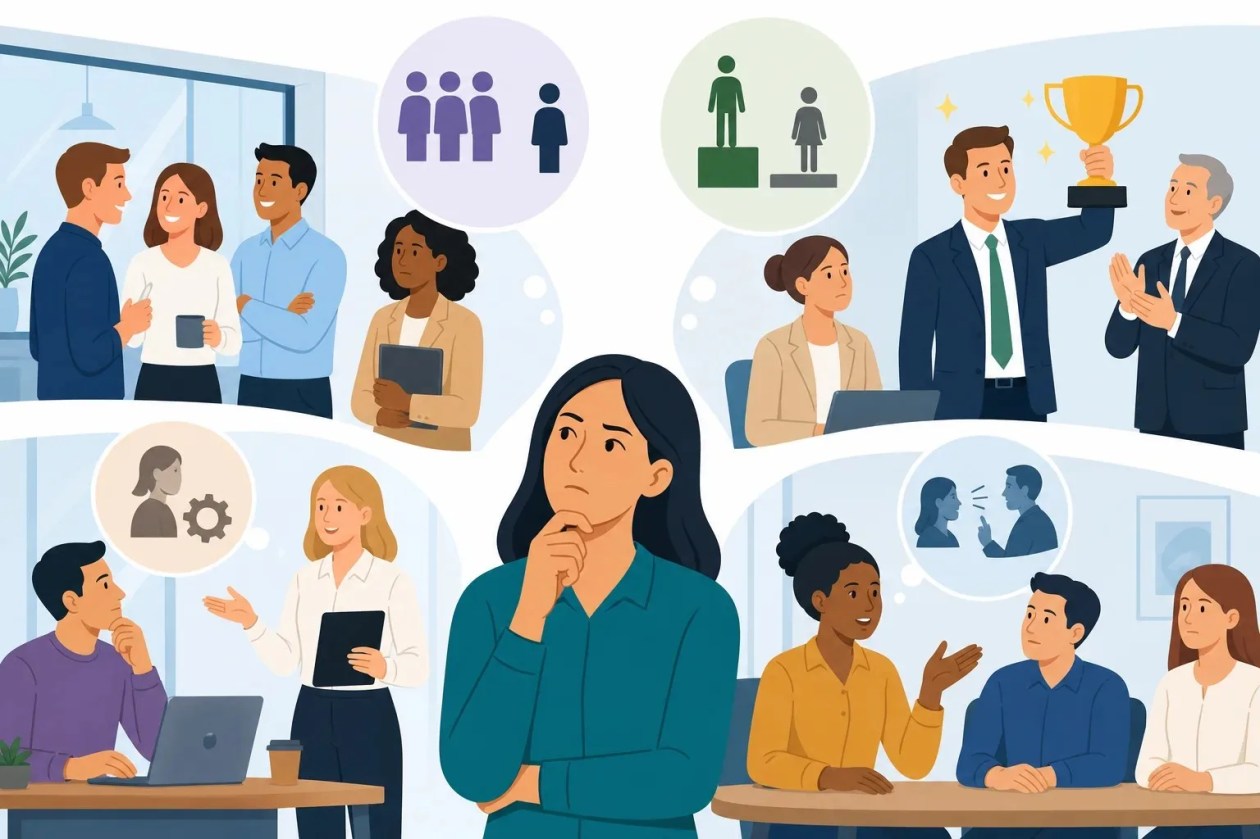
Bias in the workplace is often less obvious than people expect. It may not show up as open hostility; instead, it can appear in everyday assumptions, habits, and decisions that seem normal at the time. This lesson helps you see how those hidden messages influence behaviour, why they matter, and how they can lead to unfair treatment and legal risk.
Bias is often built from messages you have absorbed
The source material makes a clear point: you do not need to be consciously racist, sexist, or homophobic for bias to affect your actions. You may have picked up messages about race, class, gender, disability, religion, age, or sexuality long before you entered the workplace. These messages can come from family, school, neighbourhoods, media, or the people around you. They shape what feels “normal” to you, even when no one has directly taught you to discriminate.
The Rosetta story is a good example. As a child, the speaker acted in a way that did not match her own values of kindness and fairness. Later, she realised that she had absorbed a message from her peers that Rosetta, because she was poor, could be treated differently. No adult had said that poor people should be mistreated, but the social message was still powerful. In the workplace, the same thing can happen: you may not intend harm, yet still make choices based on assumptions that you have never questioned.
Assumptions can become workplace discrimination
Bias becomes a workplace problem when it affects decisions about hiring, promotion, discipline, access to opportunities, or everyday interactions. The source material refers to Title VII of the Civil Rights Act of 1964, which prohibits discrimination in employment on the basis of race, colour, religion, gender, national origin, age, disability, genetics, and, to some extent, sexual orientation and gender identity. In practice, this means that even small assumptions can have serious consequences if they influence how people are treated at work.
One striking example in the source material is the Denver trucking company that received a 15 million dollar judgment for race discrimination. The company segregated employees by race, restricted who could work on bonus double-pay days, allowed racist language, and punished a white employee who tried to help. The court found discrimination in every aspect of employment. This was not a vague or accidental problem; it was the result of decisions that could have been avoided if people had examined their behaviour more carefully.
“Different from” does not necessarily mean “less than.”
Source material
How hidden bias shows up in real life
The source material shows that bias can appear in very ordinary situations. Jennifer, the speaker’s daughter, assumed a white doctor could not really be a doctor because she had only ever seen black doctors. That was not cruelty; it was a learned pattern based on limited exposure. In workplaces, similar patterns can affect who people trust, who they listen to, who they mentor, and who they see as capable or professional.
You may also see bias in the way people talk about others, make jokes, separate groups, or decide who belongs. Sometimes people claim they “do not have messages” about race or other differences, but then their later reflection reveals that they do carry assumptions. The key lesson is that bias often lives below the surface, which is why you need to look for it actively rather than waiting for obvious misconduct.
Practical diversity means noticing and changing behaviour
The source material introduces “practical diversity” as the move from theory to action. It is not about vague goodwill or simply saying you value inclusion. It is about training yourself to spot the messages that may be shaping your reactions, stop judging difference as inferiority, and use the golden rule: treat other people as you would like to be treated. In other words, diversity becomes practical when it changes what you actually do in meetings, recruitment, feedback, teamwork, and everyday conversation.
- Notice your own assumptions. Ask yourself what messages you absorbed about people who are different from you, and whether those messages are affecting your choices.
- Pause before judging. Being different from you does not make someone less capable, less professional, or less deserving.
- Use respectful behaviour consistently. Be kind, compassionate, and fair, even when you disagree with someone.
- Think about impact, not just intent. Good intentions do not erase harmful outcomes if your actions still disadvantage others.
- Check whether a decision could create legal risk or unfair treatment before you act.
What to do when bias appears in conversation or resistance
The source material also shows that people may resist diversity training because of personal beliefs or discomfort. In response, the speaker does not argue that people must like everyone. Instead, she draws a line between private beliefs and workplace behaviour. You are free to hold opinions, but you are not free to turn them into discriminatory action that harms colleagues or puts your employer at risk. This distinction is important: workplaces do not require everyone to think the same, but they do require everyone to act lawfully and respectfully.
If you are confronted with bias, either your own or someone else’s, the most useful response is to return to behaviour. What was said? What decision was made? Who was affected? What would a fair, respectful alternative look like? This practical focus keeps you grounded and helps you move from abstract values to concrete change.
Key takeaways
- Look for hidden messages that may be shaping your assumptions, even if you never intended harm.
- Remember that bias can affect everyday workplace decisions and create serious legal and financial risk.
- Use the golden rule in practice: be kind, respectful, and fair in how you treat colleagues.
- When in doubt, ask whether your action would still seem acceptable if you were on the receiving end.
Leave a Reply