
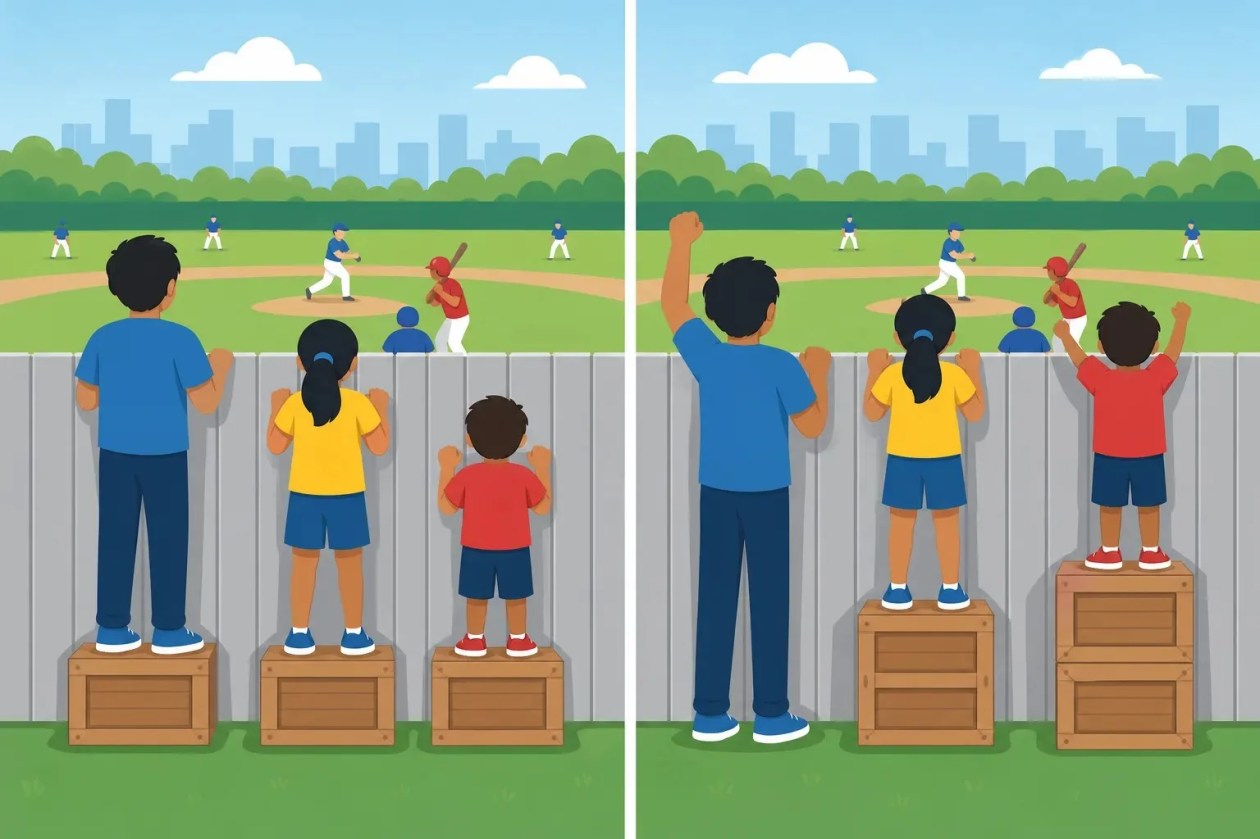
This lesson uses a simple story about a teenager wanting to go to a club to show why equity matters. Equity is not about giving everyone the same thing; it is about giving people what they need, when they need it, so they can succeed. In education, that means recognising that students arrive with different experiences, strengths and needs, and then responding fairly and thoughtfully.
What the club story teaches you
In the story, the speaker’s brothers were allowed to go to the club at 15, but he was not. At first, that felt unfair. He thought equality meant everyone the same age should get the same permission. His mother explained something deeper: a good parent knows which child is ready for which experience. His brothers were ready for that environment, but he was not. When he went anyway, he got punched in the eye and learned the lesson the hard way. The point is that equal treatment is not always the same as fair treatment.
“Equality said I was 15 and that I could go to this club. Equity said I need to grow and mature enough more before I could enter that environment.”
source material
Equality and equity: the key difference
Equality means giving everyone the same thing. That can sound fair, but it does not always meet people’s real needs. Equity means looking at what each person needs to reach success. In the story, equality would have meant letting all three brothers go to the club because they were the same age. Equity meant making a different decision for one child because he was not ready yet. In school, this same idea applies when students need different kinds of support to learn well.
Why equity matters in school
The source material shows two main forms of equity in education. The first is economic equity, which is about resources. Some schools have modern buildings, robots, internet access and textbooks; others may have old buildings, no heating or air conditioning, no high-speed internet and no books. Students cannot compete fairly if their schools do not give them the tools they need. The second is cultural equity, which means having teachers and staff who reflect, respect and value the students they serve. Students benefit when adults understand their culture, identity and lived experience.
- Economic equity: fair access to resources such as books, technology, safe buildings and learning support.
- Cultural equity: teachers and staff who look like students or understand and value their backgrounds.
- A belief that all students are at promise and at potential, not “at-risk” if the right support is provided.
What this means for you as a learner
Equity helps you see that students do not all start from the same place. Some need more academic support, some need stronger relationships, and some need adults who believe in them when they do not yet believe in themselves. The stories of John and Shamika show that love, mentoring, resources and high expectations can change lives. When students are given what they need, they can grow, graduate and build a future. That is why equity is important: it makes success possible, not just promised in theory.
- Look beyond treating everyone the same and ask what each person needs to succeed.
- Notice how resources, representation and relationships all affect learning.
- Remember that equity is about opportunity, dignity and support.
- Use the idea of readiness: not every student is ready for the same challenge at the same time.
Key takeaways
- Equity means giving people the support they need, not simply the same support as everyone else.
- The club story shows that fair treatment can look different for different people.
- In education, equity includes both resources and representation.
- When students feel supported and believed in, they are more likely to succeed.
Leave a Reply