
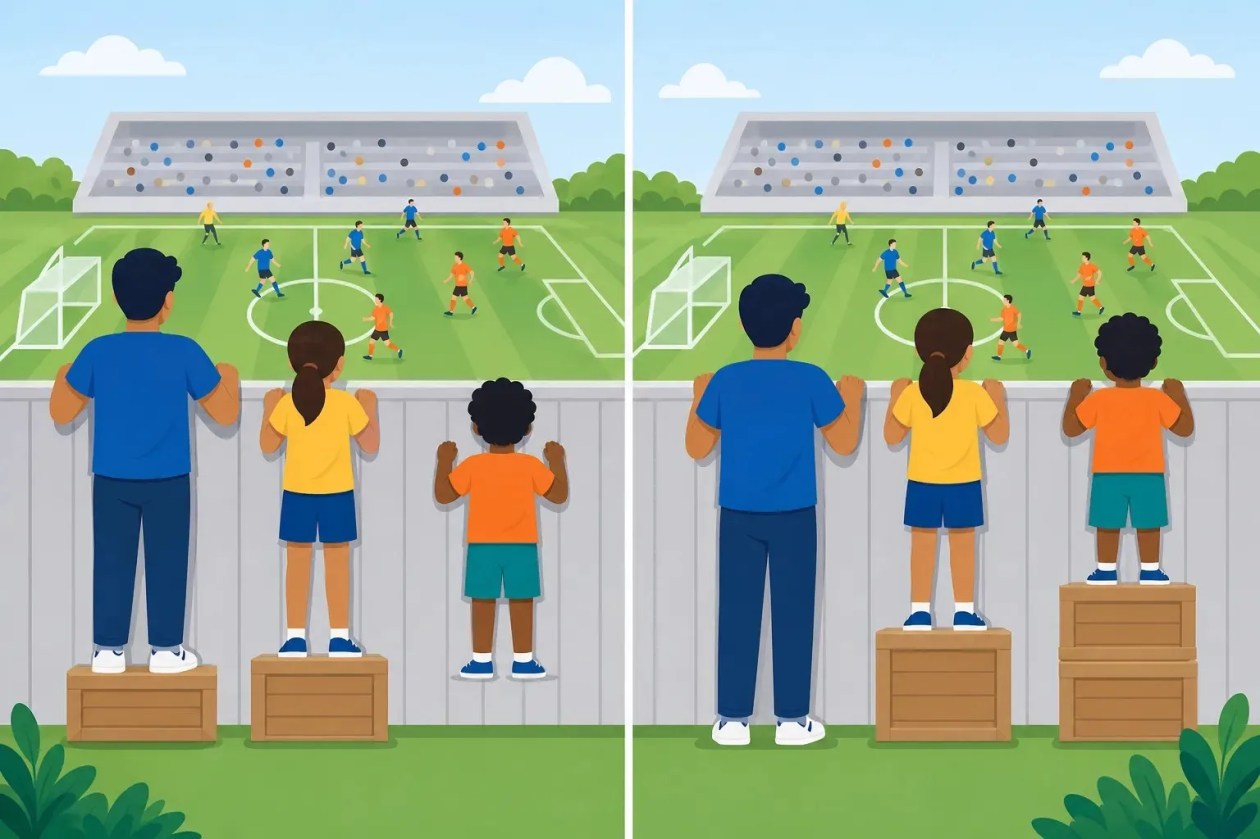
Equity is about giving people what they need to succeed, rather than giving everyone exactly the same thing. In education, that means recognising that students arrive with different strengths, experiences, and challenges, and then providing the right support so each learner can grow. The source material shows this clearly through a simple family story: two brothers were allowed to go to the club at 15, but the speaker was not ready yet. The point was not unfairness for its own sake; it was that a good parent understands readiness and gives each child what is appropriate for them.
Equity is not the same as equality
Equality means giving everyone the same thing. Equity means giving people what helps them most. In the story, equality would have meant saying, ‘You are 15, so you can go to the club too.’ Equity meant looking at the child’s maturity and deciding he was not ready. That difference matters in school as well. Two students may sit in the same classroom, but one may need extra reading support, another may need a safe place to work, and another may need to see adults who understand and value their background. Equity responds to those real needs.
“Equality said I was 15 and that I could go to this club. Equity said I need to grow and mature enough more before I could enter [that] environment.”
source material
Why equity matters in schools
The source material explains that not every child in America comes to school with the same abilities or the same access to support. If schools treat unequal starting points as though they were equal, some students will be left behind. Equity matters because it helps close that gap. It gives students a fair chance to learn, participate, and succeed by making sure the right resources are available when they are needed.
Two kinds of equity: economic and cultural
The lesson describes two important kinds of equity. Economic equity is about resources: heat, air conditioning, internet access, textbooks, and modern learning tools. One school in the story had a 21st-century building and robots for sustainable agriculture, while another nearby school had no heat, no air conditioning, no high-speed internet, and no textbooks. That kind of gap makes it much harder for students to succeed. Cultural equity is about belonging and representation. The source material argues that students benefit when they have teachers, role models, nurses, and paraprofessionals who look like them and value their gifts, no matter their race, religion, gender, sexual orientation, or citizenship status.
- Economic equity: fair access to learning resources and facilities.
- Cultural equity: adults in schools who reflect and respect students’ identities and experiences.
- Support for every learner: recognising that students may need different kinds of help to reach the same goal.
How equity changes outcomes
The stories of John and Shamika show what equity can do. John arrived angry, behind in school, and without a positive black role model. He received love, academic support, mentoring, and opportunities he had never had before. He graduated and later joined the army. Shamika needed more than lessons; she needed belief, support, and encouragement to see herself as more than her past. She graduated too, and she promised to pass those lessons on. These examples show that equity is not just about schoolwork. It is also about dignity, hope, and giving people a real chance to build a better future.
- Notice what a learner needs, not just what everyone else is getting.
- Provide the right support, such as academic help, mentoring, or access to resources.
- Keep supporting the learner as they grow, because readiness can change over time.
- Measure success by progress and opportunity, not by sameness alone.
“There’s no such thing as an at-risk student. All students are at promise and at potential if the proper supports are there.”
source material
Key takeaways
- Equity means giving people the support they need to succeed, not treating everyone exactly the same.
- In schools, equity includes both resources and representation.
- Students learn better when their needs, background, and readiness are recognised.
- Strong support can change a learner’s path and help them build confidence and future opportunities.
Leave a Reply