
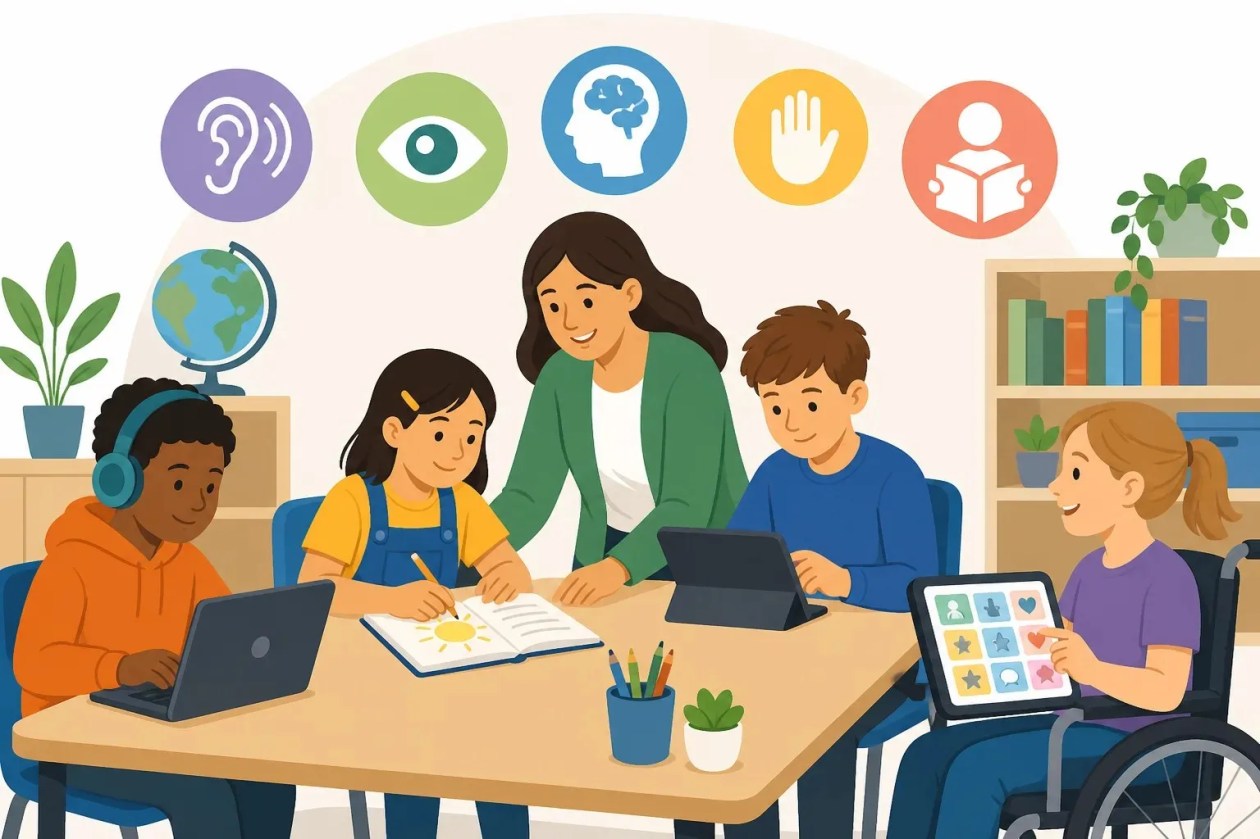
In an accessible classroom, you are not trying to make every learner do the same thing in the same way. Instead, you are planning for difference from the start so that children with different strengths, needs and backgrounds can take part fairly. This matters because accessibility is closely linked to equity: when you remove barriers, you give more learners a genuine chance to succeed.
What different learning needs can look like
Learning needs can vary in many ways. Some children may need extra time to process instructions, while others may need visual support to understand what to do. Some may find reading difficult, need help with writing, or benefit from movement breaks. Others may be learning English as an additional language, may have sensory sensitivities, or may need extension tasks because they learn quickly. As a teacher, you are looking for the barriers that stop a child from showing what they know, not just the label attached to the child.
- A child who struggles with reading may understand the topic better through pictures, spoken instructions or paired discussion.
- A child with attention needs may work better with short tasks, clear steps and a predictable routine.
- A child who finds handwriting hard may show learning through typing, drawing, speaking or using sentence starters.
- A child who is ready for more challenge may need open-ended tasks, deeper questions or independent problem-solving.
Ways teachers can respond in the classroom
Supporting different learning needs starts with flexible teaching. You can present information in more than one way, such as speaking, writing, modelling and using visuals. You can also offer more than one way for children to respond, for example by talking, writing, making a diagram or using manipulatives. This does not lower expectations. It simply gives more learners a fair route into the same learning goal.
- Plan clear instructions in small steps and check understanding before pupils begin.
- Use visual supports such as timetables, examples, word banks and diagrams.
- Build in choice so children can show learning in different ways.
- Break longer tasks into manageable parts and allow short pauses when needed.
- Notice patterns in who is struggling and adjust your teaching rather than expecting the child to cope alone.
Accessibility is not an extra task; it is part of fair teaching.
The role of school leadership and teamwork
Teachers do this work best when school leaders support it. Administrators can help by making sure staff have time, training and resources to plan accessibly. They can encourage consistent approaches across the school, so children do not face a different set of barriers in every classroom. Strong leadership also means listening to teachers, families and pupils, because they often know where the barriers are. When the whole school works together, accessibility becomes part of everyday practice rather than a special arrangement for a few children.
- Shared planning time helps teachers adapt materials and discuss learner needs.
- Staff training builds confidence in inclusive strategies and reasonable adjustments.
- Clear communication with families can reveal useful information about how a child learns best.
- A whole-school approach makes support more consistent across classes and year groups.
Why this matters for equity
Equity means giving each child what they need to take part and make progress. In school, that does not mean treating everyone identically. It means recognising that some learners face more barriers than others and responding in ways that are fair. When you support different learning needs well, you help prevent small barriers from becoming big gaps in achievement, confidence and belonging. That is why accessibility is central to an equitable school system.
Key takeaways
- Look for barriers in the task, not just difficulties in the child.
- Use flexible methods so pupils can access learning and show understanding in different ways.
- Work with colleagues and school leaders to make support consistent.
- Remember that accessibility is a key part of fairness and equity in education.
Leave a Reply