
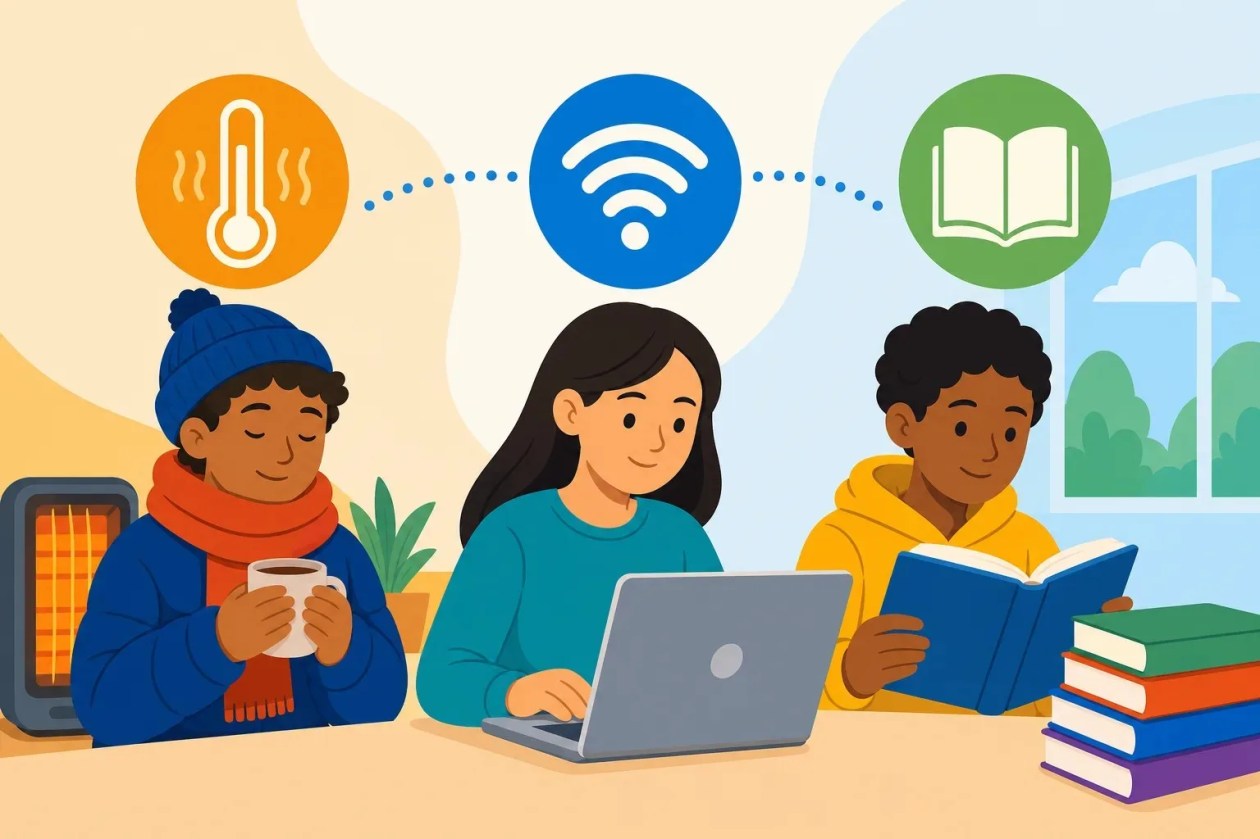
A school can only be fair if students have the basic tools they need to learn. In the source material, one of the clearest examples of inequity is the contrast between a modern school with robots and a nearby school with no heat, no air conditioning, no high-speed internet and no textbooks. This lesson helps you understand why those things matter, and how missing them affects a student’s chance to succeed.
What these resources do for learning
Heat, internet and textbooks are not extras. They are basic learning resources. Heat and air conditioning help students stay comfortable enough to concentrate. High-speed internet gives access to research, digital learning tools and up-to-date information. Textbooks provide a shared starting point for lessons, practice and revision. When these are present, students have a better chance to keep up with the work and build confidence in their learning.
How do we expect the students at the second school to compete with the students at the first school if these inequities exist?
Why missing basics creates unfairness
The source material shows that two schools can serve students very differently even when those students live close to one another. One school may have modern facilities and advanced tools, while another has old buildings and none of the basics. That is not equality, because students are not starting from the same place. Equity means recognising that some students need more support and better resources so they can have a real chance to succeed.
If a classroom is too cold in winter or too hot in summer, students may struggle to focus. If there is no internet, they may not be able to complete online work or use digital resources. If there are no textbooks, students may not have enough material to practise and revise. These barriers make it harder to learn, and they can widen the gap between students who have enough and students who do not.
Economic equity in schools
The source material calls this kind of support economic equity. It means making sure students have the resources they need when they need them. In schools, that includes safe buildings, working heating and cooling, reliable internet and learning materials. Economic equity is important because it helps remove barriers that students cannot control on their own.
- A comfortable classroom helps students pay attention.
- Internet access opens up more learning opportunities.
- Textbooks and materials support practice and revision.
- Well-resourced schools give students a fairer chance to compete and succeed.
What this means for you as a learner
If you have ever found it hard to learn because a room was uncomfortable, a computer would not connect, or you did not have the right book, you have already seen why equity matters. Learning is not only about effort. It is also about access. When schools provide the right resources, they help you show what you can do. That is why heat, internet and textbooks are not small details — they are part of giving every student a genuine opportunity to learn.
Key takeaways
- Heat, internet and textbooks are basic learning tools, not luxuries.
- Equity means giving students the support they need to succeed, not just the same thing as everyone else.
- Schools with fewer resources make it harder for students to compete fairly.
- When schools invest in essential resources, they give more students a real chance to learn and achieve.
Leave a Reply