
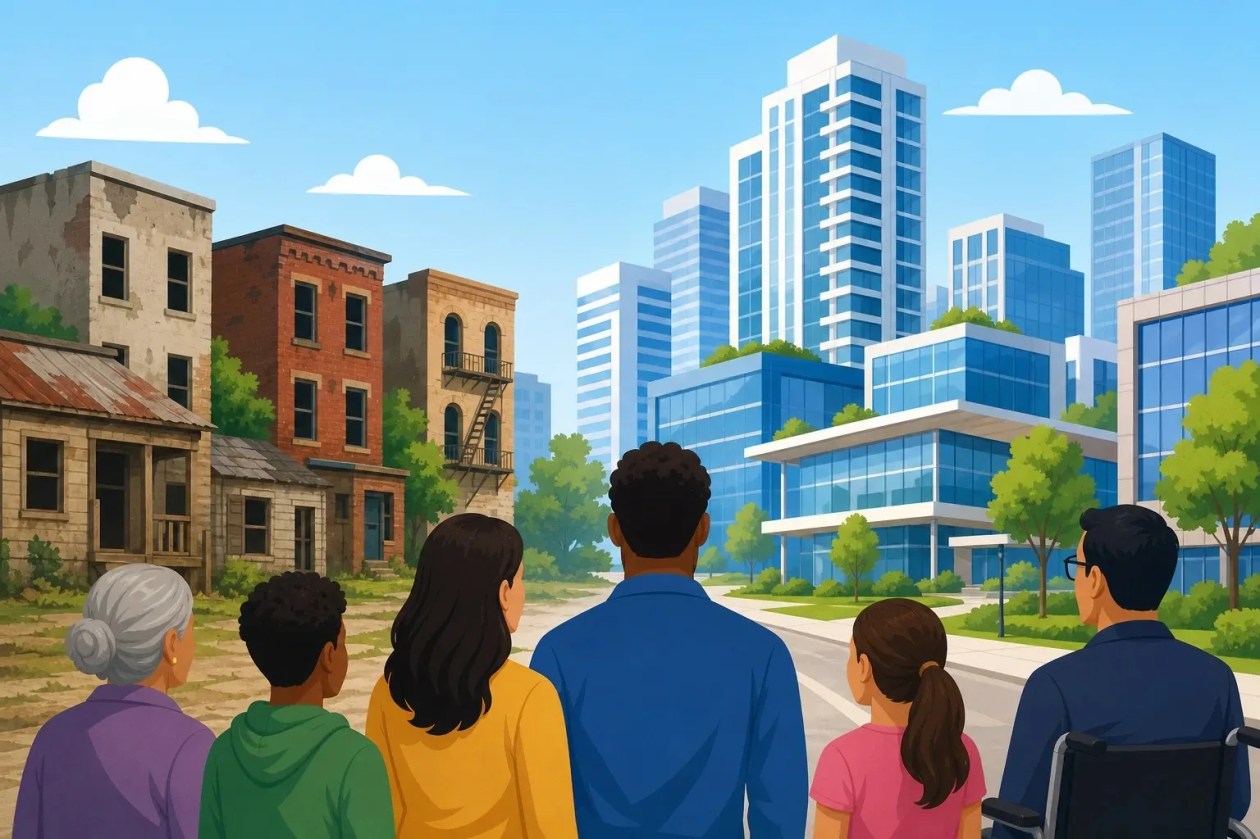
When you look at schools, the building itself can tell you a lot about equity. A modern school with heat, air conditioning, internet and up-to-date equipment gives students a very different chance to learn than an old building with no textbooks, no internet and no proper temperature control. This lesson helps you see how those differences are not just about appearance — they affect what students can do and how well they can succeed.
What the contrast between buildings shows
In the source material, one school is described as a 21st century building where students use robots for sustainable agriculture. Just down the road, another school is 100 years old and has no heat, no air conditioning, no high-speed internet and no textbooks. The point is simple: if two schools serve students in the same area but one has far more resources, the students are not starting from the same place. Equality would mean giving both schools the same thing. Equity means recognising that the under-resourced school needs more support so its students can have a fair chance to learn and compete.
How do we expect the students at the second school to compete with the students at the first school if these inequities exist?
source material
Why old buildings can create unfair barriers
A school building is more than walls and windows. If a classroom is too hot, too cold, or missing basic learning tools, students may struggle to concentrate, keep up and stay engaged. No high-speed internet can limit research and digital learning. No textbooks can make it harder to complete work and revise. These are not small inconveniences; they are barriers that affect achievement. That is why the source material calls this an economic equity issue: students need the resources they need when they need them.
What equity looks like in practice
Equity does not mean every school gets exactly the same thing. It means each school gets what it needs to give its students a fair chance. In a newer, better-resourced school, students may already have access to technology and a strong learning environment. In an older school, equity might mean investment in repairs, heating and cooling, internet access, textbooks and other learning supports. The goal is not to make every building identical. The goal is to make sure students are not held back by conditions they did not choose.
- Modern facilities can support richer learning experiences, such as using robots or other technology.
- Basic comforts like heat and air conditioning matter because they affect concentration and attendance.
- Internet access and textbooks are essential learning tools, not extras.
- When one school has far more than another, students do not begin with equal opportunities.
Why this matters for you
If you are a student, equity helps explain why some schools seem to have more opportunities than others. It also helps you understand that success is not only about effort. Students can work hard and still be limited by the resources around them. Seeing old buildings and new buildings side by side is a clear way to understand why equity matters: it is about making sure all students have what they need to learn, grow and achieve.
Key takeaways
- A school building can reveal whether students are being given a fair chance to learn.
- Equality gives the same thing to everyone; equity gives people what they need to succeed.
- Missing basics like heat, internet and textbooks can block learning and achievement.
- Fair education means investing more where the need is greater.
Leave a Reply