
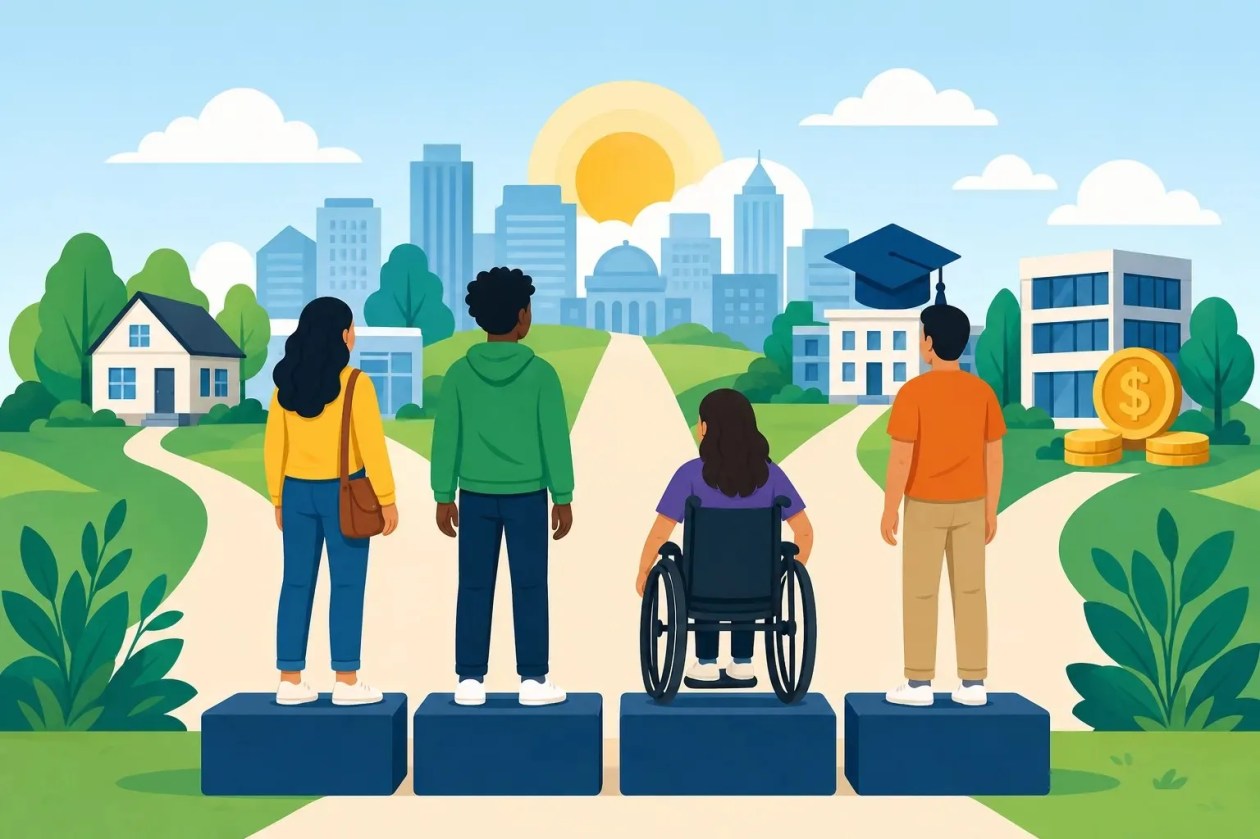
Economic equity means giving people the resources, support, and opportunities they need to succeed. In schools, it is not about giving every student exactly the same thing. It is about recognising that different students arrive with different needs, and then responding in a fair way so each one can do their best.
Equality and equity are not the same
A simple way to understand this is through the story of the speaker and his mother. At 15, his brothers were ready to go to the local teen club, but he was not ready for that environment. If the rule had been based on equality, everyone the same age would have been allowed to go. But his mother used equity: she looked at what he needed at that moment and decided he needed more time to grow and mature. That choice protected him, even though it did not treat him exactly the same as his brothers.
A good parent knows her children and what they're ready for and not ready for.
Source material
What economic equity looks like in schools
In schools, economic equity is about making sure students have the resources they need when they need them. The source material gives a clear contrast: one school had a modern building, robots, and support for sustainable agriculture, while another school nearby had no heat, no air conditioning, no high-speed internet, and no textbooks. Students in those two schools are not starting from the same place, so giving them the same support would not be enough. Economic equity means closing that gap with the right resources.
- safe and well-maintained buildings
- heating, cooling, and other basic facilities
- reliable high-speed internet
- textbooks and learning materials
- enough staff and support for students who need extra help
Why economic equity matters
When schools do not have equitable resources, students do not have the same chance to succeed. A child in a well-resourced school can benefit from modern tools and support, while a child in an under-resourced school may be trying to learn in a building that makes learning harder every day. Economic equity matters because success should not depend on how much money a school has, or which neighbourhood a child lives in. It should depend on the child’s effort, potential, and access to the support they need.
The source also shows that economic equity is not only about money in a narrow sense. It is about making sure students can actually use the opportunities in front of them. If a school expects students to compete, learn, and thrive, then it must first give them a fair starting point.
Key takeaways
- Equity means giving students what they need, not giving everyone the exact same thing.
- Economic equity in schools is about fair access to resources like buildings, internet, books, and support.
- Students cannot succeed equally if their schools start with very different conditions.
- When you think about equity, ask: what does this student need right now to thrive?
Leave a Reply